
Is Low-Carbon Farming for Smallholders Possible?
Large-scale carbon projects often focus on reforestation or mangrove restoration, led by government agencies or major corporations. But our sandbox initiative is not about conservation alone—it’s about transforming the food systems that account for nearly one-third of global greenhouse gas emissions.
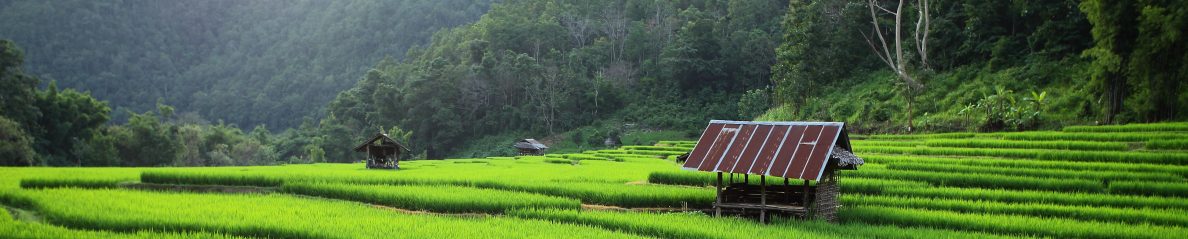
If we fail to create viable, scalable models within agricultural landscapes, we will never shift the behaviour of producers and consumers. That’s why FoodInnovate Thailand launched the TerraFlow sandbox, expanding from our initial 8-Ha pilot to a 129-Ha transformation zone gradually with alternative wetting and drying (AWD) rice field under the project Ground2Gut Connect: TerraFlow.
This is not just mitigation—it’s a new kind of outcome: High-Value Mitigation Outcomes that integrate human health, soil health, and climate resilience in ways that conventional forest carbon projects cannot.
Why This Matters
- If we don’t rethink monoculture rice systems, methane emissions will persist and soils will continue to lose their biological vitality.
- A sandbox that embeds livelihoods within its design enhances the productivity of existing land—not just its carbon value.
- We reduce the risk of carbon loss by introducing economic incentives—agricultural income streams that outperform the limited returns from conventional, dense forest monocrops designed for rapid canopy closure but unsuitable for food or medicinal crops.
- The challenge of Ground2Gut Connect: TerraFlow Sandbox lies in its complexity and in the verification process. Operating in lowland floodplain zones, we measure soil carbon, methane emissions, and even dissolved oxygen levels to ensure integrity and auditability.
This is not just a farm—it’s a living lab for climate-smart agriculture, data-backed mitigation, and inclusive transformation.
 À Table! e-Magazine นิตยสารออนไลน์ ครัวของคุณ