
The original article is in English.
The Lower Chao Phraya River Basin (LCPB) is a strategic region for Thailand’s agriculture and economy, yet it remains highly vulnerable to intensifying climate-induced floods. In response, the government has implemented Nature-Based Solutions (NBS), designating agricultural lands as temporary flood-retention zones to protect urban and industrial areas downstream.
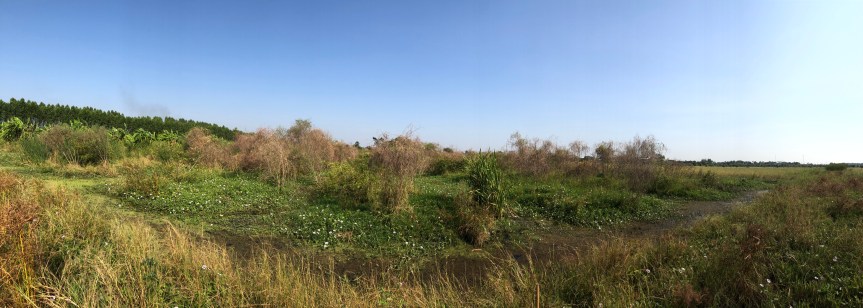
While this approach has proven effective at the macro level, smallholder farmers in these floodplains continue to bear disproportionate costs—uncompensated drainage expenses, lost planting windows, and income uncertainty. These impacts highlight a critical gap in current compensation mechanisms, which fall short of delivering economic fairness and inclusive participation for local communities.
Adding to this complexity is the Bang Ban–Bang Sai drainage canal project (Chao Phraya 2), a major infrastructure initiative designed to divert floodwaters away from Ayutthaya’s urban core. Scheduled for completion around 2027, the canal will increase hydraulic pressure on surrounding peri-urban agricultural zones, intensifying the reliance on flood-retention fields without yet clarifying how these areas will be supported or compensated.
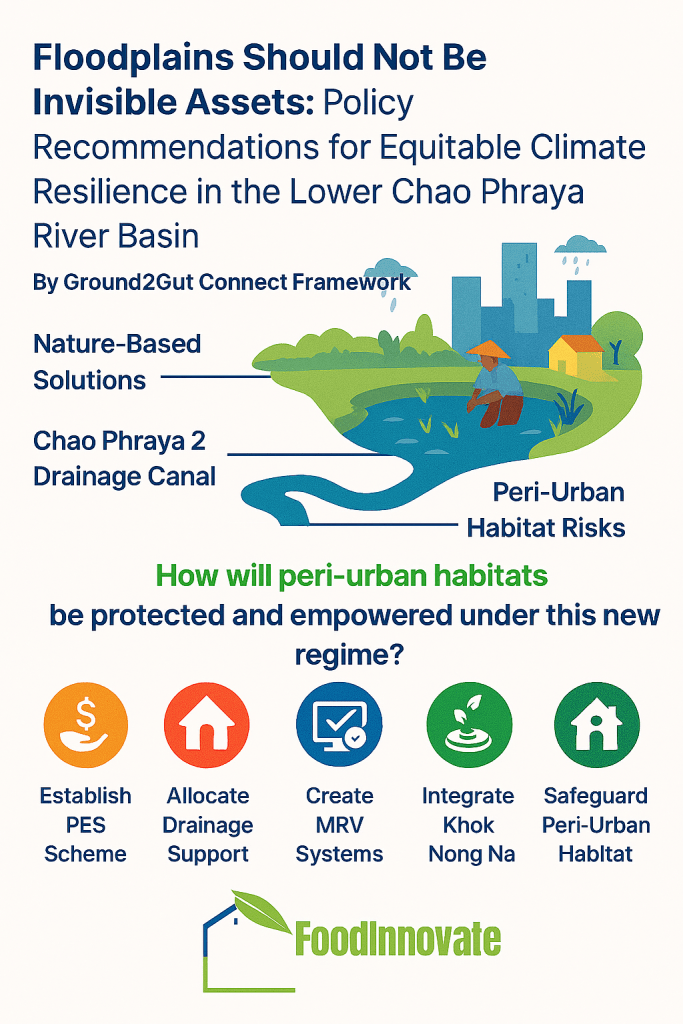
This raises an urgent question: How will peri-urban habitats—those transitional zones between city and countryside—be protected and empowered under this new regime? Without proactive policy integration, these communities risk becoming expendable buffers rather than co-creators of climate resilience.
Policy Recommendations for Sustainable Transformation
- Establish a Formal Payment for Ecosystem Services (PES) Scheme
Recognise and compensate farmers for their role in flood mitigation and ecosystem stewardship. - Allocate Dedicated Budget for Post-Flood Drainage Support
Cover the operational costs for water removal from retention fields, which farmers currently bear. - Create Accessible Monitoring, Reporting, and Verification (MRV) Systems
Enable smallholders to participate in ESG-linked investments and carbon credit markets fairly. - Integrate Local Wisdom into National Water Management Plans
Embed models like Khok Nong Na into infrastructure planning to enhance agroecological resilience. - Safeguard Peri-Urban Habitats through Inclusive Planning
Ensure that communities near urban edges are not treated as hydraulic spill zones, but as active partners in climate adaptation—with access to land-use protections, financial incentives, and participatory governance.
These recommendations aim to support the government’s mission of integrated water governance, economic stability for farmers, and long-term climate resilience. By shifting from reactive aid to proactive investment, Thailand can unlock the full potential of its agricultural landscapes—not only as food producers, but as frontline climate partners.
Implementing these reforms will not only reduce flood risks but also build a robust, environmentally sound agricultural system that serves as a foundation for sustainable national development.
Discover more from À Table! e-Magazine นิตยสารออนไลน์ ครัวของคุณ
Subscribe to get the latest posts sent to your email.

 À Table! e-Magazine นิตยสารออนไลน์ ครัวของคุณ