
The original article is in English
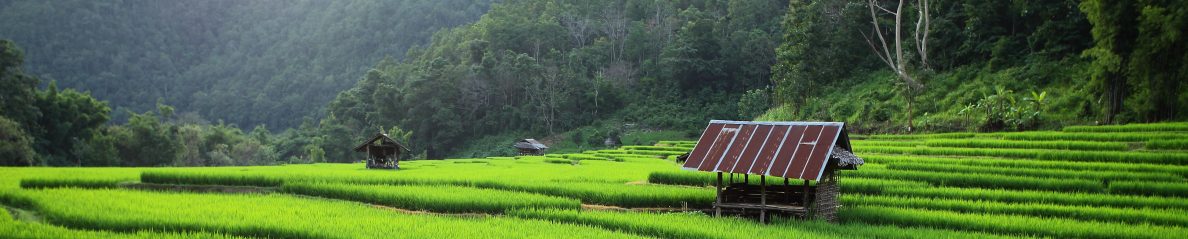
Witness the transformation of Thai farmers as they embrace sustainable agriculture! From rice paddies to diverse agroforestry, they’re reducing chemical use and cultivating a variety of fruits and short-lived crops. But with this shift comes new challenges: navigating unfamiliar supply chains and processing products for uncharted markets. FoodInnovate and BTLLAgroforestry are asking: How can we support these resilient farmers who are investing in a greener future?
Why sweet potato?
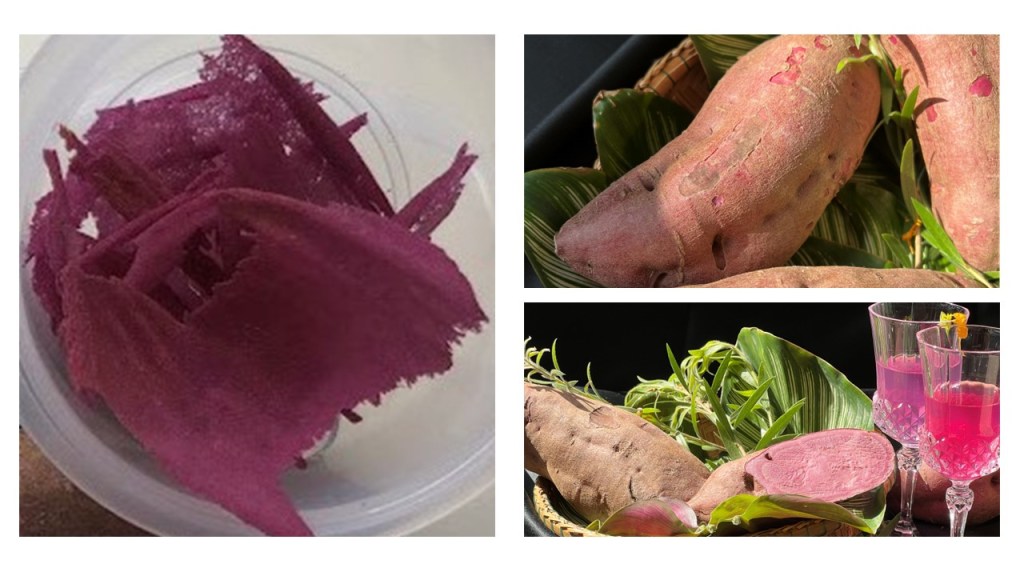
Sweet potato (Ipomoea batatas) is the second-largest tuber production in the world. Thai farmers in Phra Nakhon Si Ayutthaya are considering changing agricultural practice to multiple crops instead of rice farming. They grow many varieties of sweet potato possessing different colours and bioactive compounds. For example, purple sweet potato is rich in anthocyanins while yellow and orange varieties have high content of carotenoid compounds.
Although sweet potato of the Japanese varieties are famous for their colour, sweeter taste and wider range of texture compared to domestic varieties and find their markets in Ayutthaya, the farmer collectives are looking for Bangkok markets for both Japanese and Thai varieties.

The next steps for rural-urban codevelopment for regenerative agri-food systems
We are working closely with these farmers to expand their markets and product varieties in food and beverage sectors in Bangkok to help them diversify their products, such as preparing sweet potato flake and powder for use in bakery products and functional drinks. However, we have also explored other possible innovations as well.
Halal vinegar: the South-East Asian approach
According to Islam, vinegar is halal. However, several criteria need to be fulfilled during vinegar processing. Vinegar made from alcoholic raw material, namely wine or cider, is not considered halal. Moreover, ethanol addition during the process is not allowed in halal food production. According to the Indonesia Council of Ulama, permissible ethanol content in vinegar is 1 %. This is also similar to other ASEAN countries like Malaysia and Thailand, while Singapore has imposed a 0.5 % limit for ethanol content in vinegar.

Researchers from the Department of Food Science and Technology, Faculty of Agro-Industry, Kasetsart University in Thailand have just reported the use of successive saccharification and co-fermentation (SSCF) of mixed amylolytic fungi, baker’s yeast, and acetic acid bacteria, all of which were from Thailand Institute of Scientific and Technological Research (TISTR) collection, to produce acetic acid using purple sweet potato flour as the primary carbon source. The gas chromatography-flame ionization detector (GC-FID) revealed that 2 species of amylolytic fungi co-fermented with baker’s yeast and acetic acid bacteria called Acetobacter pasteurianus produced acetic acid during the SSCF process with the acid conversion yield of 137% of the theoretical maximum after 20 days under static condition without aeration.
The researchers also used rice flour as sorbent material to preserve the viability of A. pasteurianus during drying, to obtain a starter powder after drying at 50 °C for 3 hours. The SSCF process that used dried acetic acid bacteria powdered starter could produce acetic acid of 55 to 77 g/L, depending on the species of amylolytic fungi, while maintaining ethanol concentration to below 55 g/L throughout the fermentation process.
Bibliography
Cakrawati, D., Srivichai, S., Hongsprabhas, P. 2021. Effect of steam-cooking on (poly)phenolic compounds in purple yam and purple sweet potato tubers. Food Research 5 (1) : 330 – 336.
Cakrawati, D., Hongsprabhas, P. 2024. Consecutive purple sweet potato vinegar fermentation using mixed starter of Aspergillus spp, Saccharomyces cerevisiae, and dried starter of Acetobacter pasteurianus. ASEAN Journal of Science and Engineering 4(1): 49-60.
Hongsprabhas, P. and Buckle, K.A. 1991. Cooked and raw cassava fermentation by fungi isolated from traditional fermented foods. ASEAN Food Journal 6: 64-68.
Hongsprabhas, P. 2008. Rice Protein Network (Thai Patent No. 78099). Thailand Department of Intellectual Property.
Hongsprabhas, P. 2023. Toward urban-rural linkage development: contribution of climate-adaptive agroecology in the lower Chao Phraya River Basin, Thailand. Frontiers in Sustainable Cities 5:1146087.
Story by FoodInnovate
Photography by Primri88
Discover more from À Table! e-Magazine นิตยสารออนไลน์ ครัวของคุณ
Subscribe to get the latest posts sent to your email.

 À Table! e-Magazine นิตยสารออนไลน์ ครัวของคุณ