
The original article is in English
BTLLAgroforestry was initiated in 2016 as a field monitoring pilot project to convert a rice field to multi-crop agroforestry. It is a private field lab run by the landowner, working with current local farmer families. We have restored the soil and water qualities by ending the use of agrochemicals, converting a mono-crop rice field to multi-species agroforestry, and starting to produce agricultural products before the COVID-19 pandemic. The microclimate and evapotranspiration around the mini-forest of woody trees could now accommodate growing vegetables under their shade.
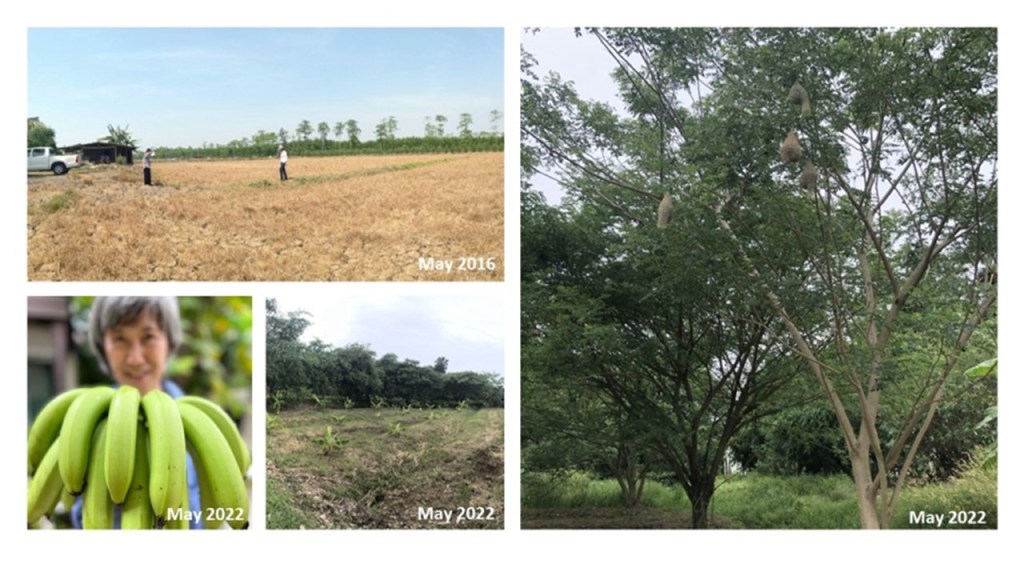
Soil and water restoration at BTLLAgroforestry, Phra Nakhon Si Ayutthaya, Thailand
BTLLAgroforestry also acts as a mediator for agri-food research translation on the BCG economy at the farm level for its mission as a local social entity. We have extended our mission to social inclusion within the village and local schools, emphasising the food-health-ecology-society nexus in 2022 under support from the EU-ASEAN People for Peat Business Hub program.
The NBS for flood mitigation for lower Chao Phraya Basin in full operation
Over the past three years, the national large-scale nature-based solutions (NBS) for flood mitigation for the lower basin central plain have used the western side of Ayutthaya as a water catchment area, resulting in the water-logging area in Lat Bua Luang district for 3 months between October and December.
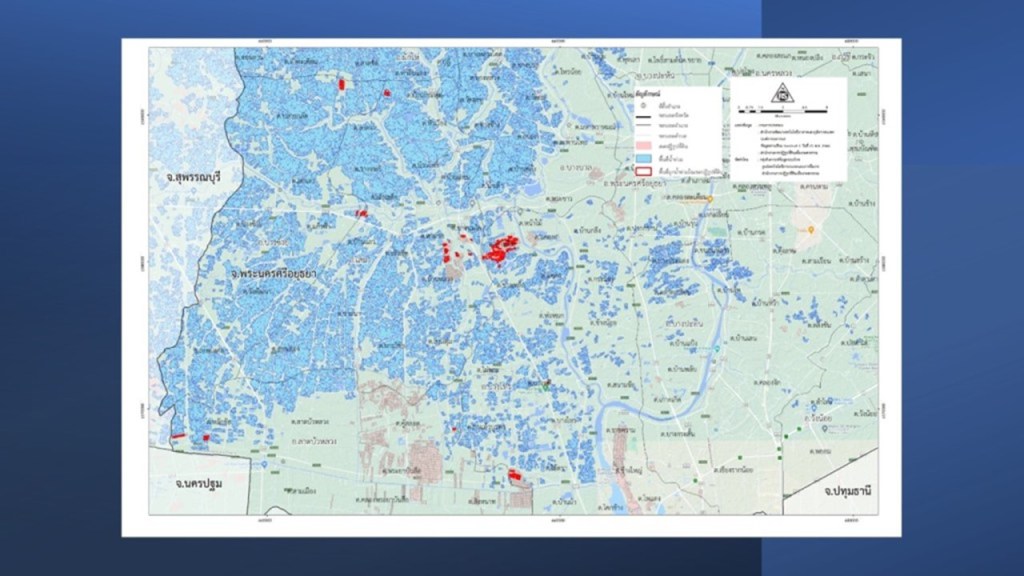
Cr. Agricultural Land Reform Office and The Geo-Informatics and Space Technology Development Agency
Despite the support from the public and private sectors for the villagers and farmers in the water-logging area for three months each year, the farmers do not have enough resiliency to accommodate the continuing disastrous climate changes and unexpected situations like the COVID-19 pandemic. They lost their jobs in the cities, and have been seriously in debt during the past few years. It is getting more difficult for them to make ends meet than during the 2016 drought when we started the project.
What can we do for the community?
BTLLAgroforestry runs an 8-hectare area on organic agroforestry along with 3 farmer households. Male members of farmer households carry out most of the machinery work on the farm or get jobs outside the district to earn family incomes, especially those who own farm machines. However, the female members play essential roles in budget planning for farming and are responsible for taking care of family well-being daily.
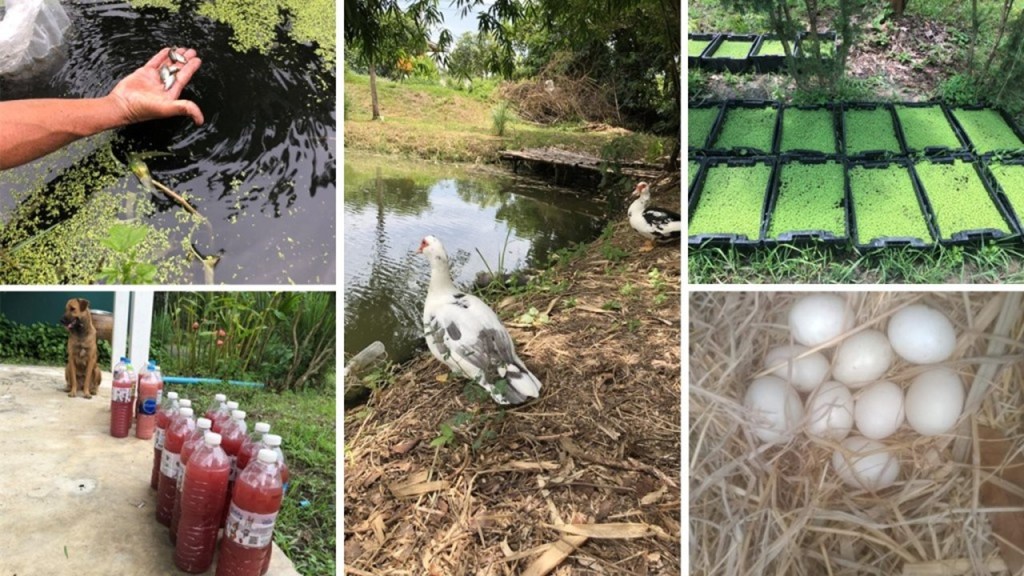
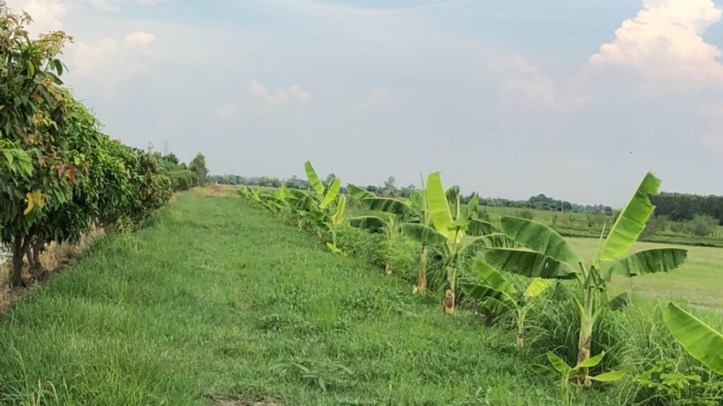
We enter our 6th year of our BTLLAgroforestry project in 2022 on the mission of organic rice cultivation within 2.4 hectares by investing on the new landscape, two farm ponds, and broader and taller ridges for the new rice field. The rest of the area was dedicated to woody trees, fruit trees, water reservoirs and furrows for internal water circulation. The ridges and compartmentalization of the whole site of 8-hectare could help us divert the logged water from the orchards to the rice field after harvest in September, while the new farm ponds can be used to cultivate aquaculture by female members and store rain water for the new rice crop.
This year the La Niña influences have induced early rain since March but we could have a dry spell from late June to mid-July. We have been challenged with the questions of WHEN should we change the soil porosity and enrich soil organic carbon and microelements using plant/rice straw debris as composting materials, WHEN should we prepare biofertilizers, how much do we need to prepare and how often should we use photosynthetic bacteria and Azolla fern to replace chemical fertilizers, and WHEN should we prepare and release microorganisms or predatory/parasitic insects for biocontrols, use physical means or herbal water-extracts for pest management in the fields.
I guess there will be more questions, trials and errors, and even failures along the way as an amateur rice farmer. Hopefully, I will be quick enough to improve our farming practices for rice, fruits and vegetables for organic certification this year.
Discover more from À Table! e-Magazine นิตยสารออนไลน์ ครัวของคุณ
Subscribe to get the latest posts sent to your email.

 À Table! e-Magazine นิตยสารออนไลน์ ครัวของคุณ