
The original article is in English
Challenges in May 2016
I am a food scientist by training and have never lived my life in a farm before. BTLLAgroforestry was initiated in 2016, when Thailand had a very long dry season. First rain in the area started in July, which was pretty late for lower central Thailand. This self-funded project aims to enhance the resiliency of the farmers in a changing climate situation. I believe that altering monocrop agro-chemical practices that the farmers are accustomed to for over 70 years to the complex agroforestry could help restore the ecosystems and farmers’ livelihood.
We began to look back and plan for the future in late 2019. We deeply understand that the farmers in Lat Bua Luang district have faced the decrease in rain precipitation, more days of high temperature, increase in soil and water degradation, together with new pest and disease challenges during the past ten years. The early phase of the project (2016 – 2019) prioritized on soil and water remediation since the land has been used to grow rice 3 times a year using agro-chemicals without crop rotation. Currently some part of the land – around 4 hectares, has begun to thrive in terms of soil and water qualities, successional ecology and hopefully a better livelihood of the farmers in the near future.
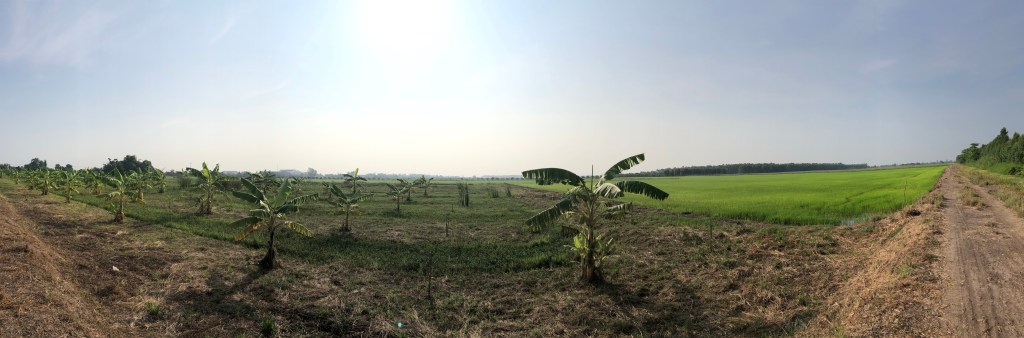
Restoring soil and water during 2017 – 2019: Syntropic agriculture at early stage
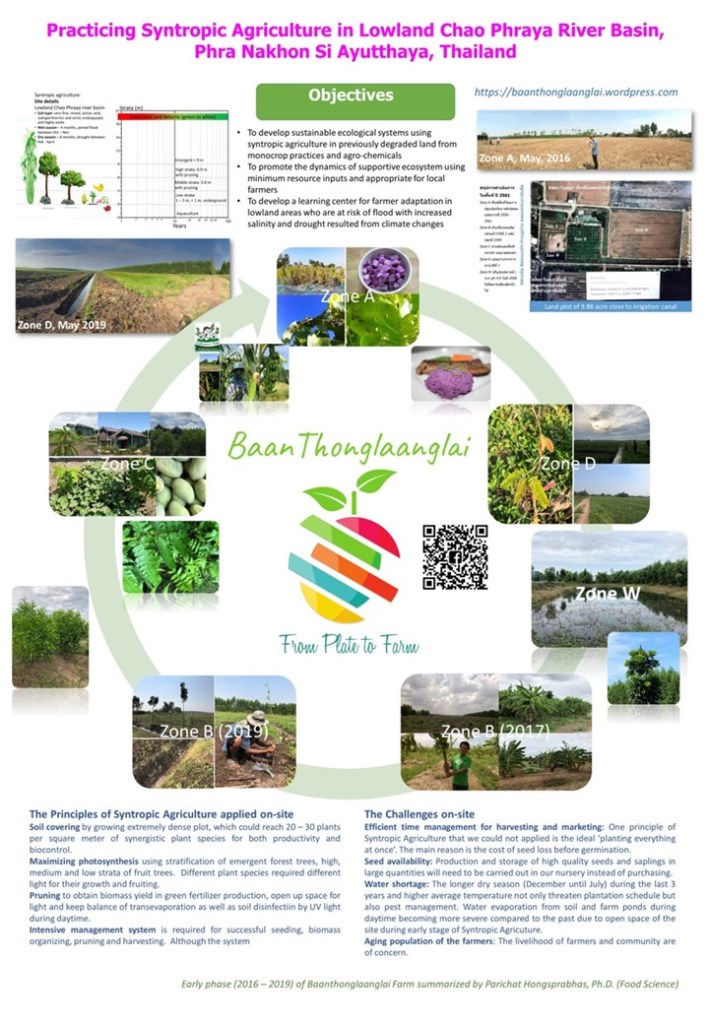
I took a non-degree course in Agroforestry Land Use offered by Kasetsart University in 2019. This help me look back at the data on-site at the farm since 2016, focus more on systematic ecosystem restoration, crop planning, and learned a lot from real farmer classmates. I am particularly interested in Syntropic Agriculture introduced by Swiss biologist/farmer Ernst Götsch. From my understanding as a beginner, I focus on 4 principles: soil covering, maximizing photosynthesis, pruning and intensive management system as detailed in Figure below.
As a weekend farmer who could be at the farm 3 hours a week, I found that it can still be executed at the early stage of restoration. Water management for plantation is even more difficult since I rely on the rain only during the first phase. The farm pond water was very acidic, having pH around 4.5 during the first year. I was not ready to invest a lot before the water can be used.
Most of the infrastructure in a farm are all set in late 2019. Nonetheless, the challenges on running the farm in 2020 forward would be more than during the early phase, such as efficient time management for harvesting and marketing the produces, seed availability, water shortage and increase salinity during dry season. I may need to look for a new way of farm management that include more people.
The way forward: local initiatives and university engagement on biodiversity and farmer adaptation to climate changes
At this stage, I have been working with one particular farmer family to run this project. I also have all the helps from my friends and colleagues from many universities. We are looking at this site as a learning center for STEM education and environmental dynamics exploration. We began 2020 with the observation of migratory birds. Will have to wait and see whether they are coming to BTLLAgroforestry regularly or not.
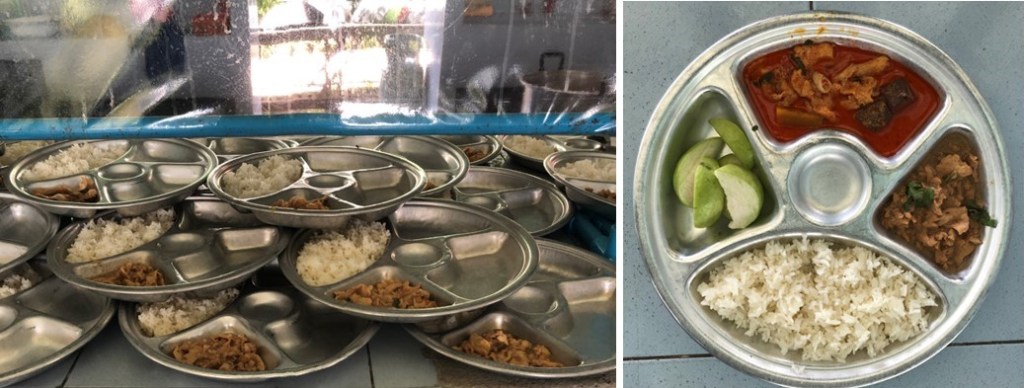
Before Covid-19 pandemic and lockdown in Bangkok, I started visiting one local school to discuss their needs for raw materials or the arrangement if BTLLAgroforestry donate some fruits and vegetables to their school lunch programme. They invited me to have lunch with the students, I am glad with the qualities and quantities of the meals the students get from the efforts of all the teachers at the cost of 18 Baht a meal for each student. I was wondering if there could be anything else we could do for the local communities.
And then, the Covid-19 pandemic hit us. The travel lockdown, especially from Bangkok, begun in March 2020.
Discover more from À Table! e-Magazine นิตยสารออนไลน์ ครัวของคุณ
Subscribe to get the latest posts sent to your email.

 À Table! e-Magazine นิตยสารออนไลน์ ครัวของคุณ