
The original article is in English
Before 1995, land owners and farmers in Lat Bua Luang district grew perennial fruit trees such as tangerine (ส้มเขียวหวาน, Citrus tangerina), lime (มะนาว, Citrus aurantifolia), pomelo (ส้มโอ, Citrus maxima Merr.), mango (มะม่วง, Mangifera indica), rose apple (ชมพู่, Eugenia jambos) and sapodilla (ละมุด, Manilkara achras Fosberg) as well as forest oak (สนประดิพัทธ์, Casuarina junghuhniana Mig.) and eucalyptus (ยูคาลิปตัส, Eucalyptus globulus Labill.) as industrial crops for construction. The mega-floods in 1995 and 2011 damaged most of the fruit trees. Many farmers had changed their crops to paddy because they could earn returns more quickly. Although the forest oak and eucalyptus cultivated as mono-crops survived the 1995 and 2011 mega-floods and gave reasonable returns to the landowners and farmers, reaching the right size for commercial use usually takes at least 5 years.
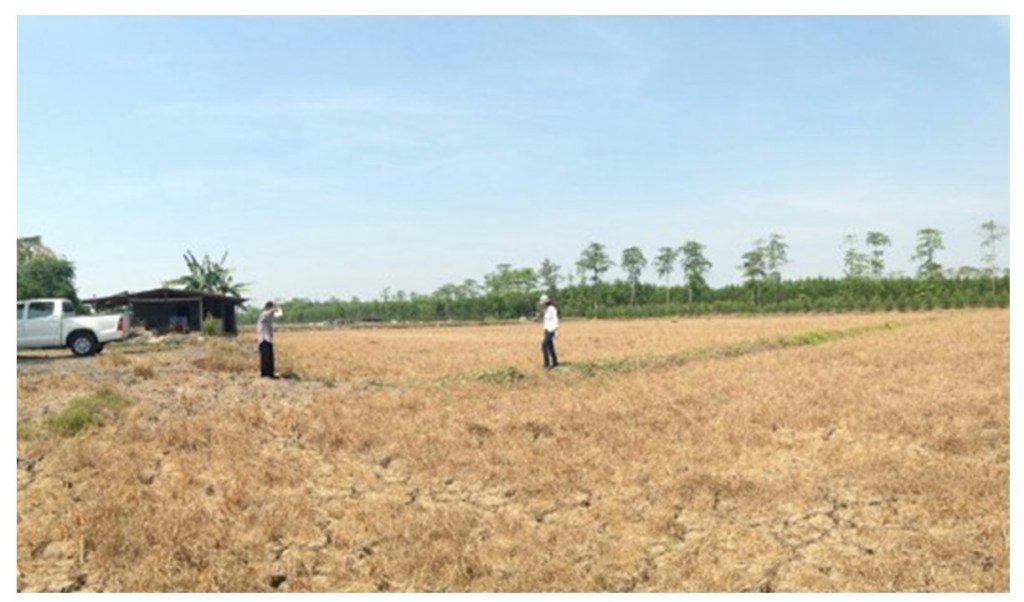
Changing agricultural practices from fruit trees to paddy altered the landscape of many sub-districts in Lat Bua Luang and the soil and water qualities. Being close to Phraya Banlue irrigation canal (คลองพระยาบันลือ), the rice farmers grow three rice crops a year to earn their income without crop rotation or soil improvement schemes. With the governments’ policies on rice price intervention over the years, it was difficult to convince the rice farmers to grow other crops as alternatives.
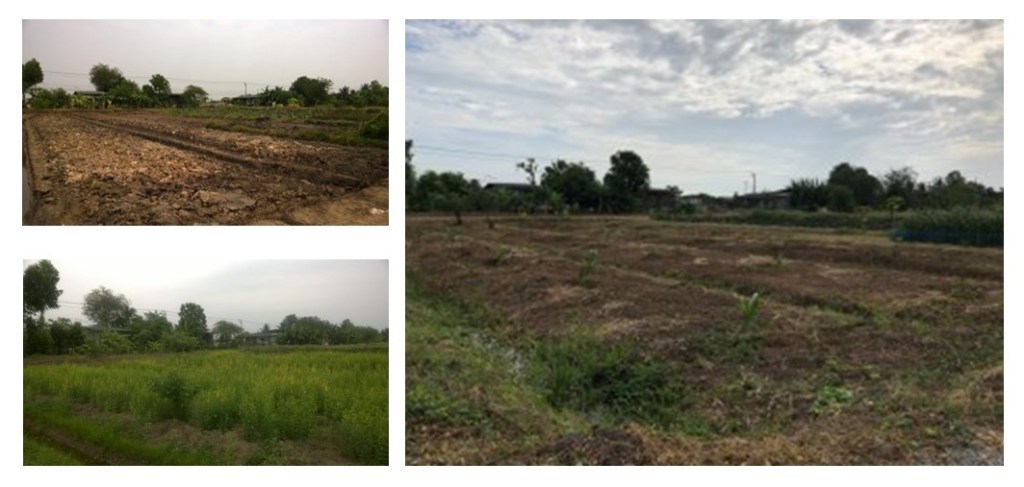
However, the 2016 drought and the state’s policies on water ration for field crops and reduced rice production in irrigation areas in 2016 stimulated the land owners to consider the long-term resilience to the pronounced effects of climate change. Although the first rain in July 2016 brought everyday practices back to the rice farmers, a long-term soil improvement scheme using alternative crops for paddy has been decided and commenced by volunteering land owners.
The Royal Forest Department, Ministry of Natural Resources and Environment encourages the landowners to grow industrial crops such as fast-growing woody trees. After water reservoir was secured at BTLLAgroforestry site in 2016, the fast-growing and acid-tolerant trees such as rain trees (ก้ามปู, Samanea saman), Siamese cassia (ขี้เหล็ก, Senna siamea) and mahogony (มะฮอกกานี, Swietenia mahagoni) as multi-function perennials that can withstand annual water area of 2 to 3 weeks period were cultivated as trial trees based on carbon capturing and storage data I could find in the literature.

Banana (กล้วยน้ำว้า, Musa ABB cv. Kluai Namwa) was cultivated as pioneer species in 2016 for soil improvement, carbon sequestration and biomass production before fragrant coconut (Cocos nucifera) tree plantation in August 2017. However, the BTLLAgroforestry site needed to receive the drained water from farmers’ rice fields into the banana and young coconut plantation area during the late rainy season in October 2017 to minimise the water in the rice field. Although the water drainage into the area supported banana growth, the side pups shot out from the mother trunks quite fast and banana leaves were broader and thicker during the first quarter of 2018.
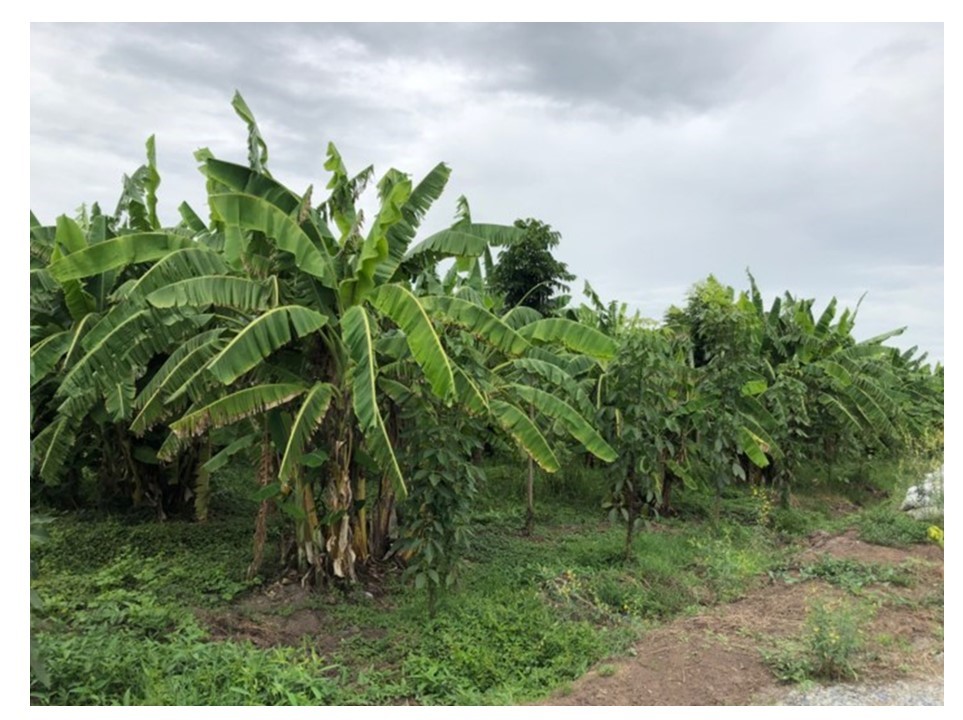
We had good banana production and income from banana fruits in early 2018. However, the coconut trees were shaded with overgrown banana trunks and leaves. The young coconut trees did not get enough sunlight. This taught me that I need to balance the soil, the water and the sunlight to support syntropic farming of coconut, banana and more perennial fruits and vegetables I intended to cultivate later. The number of side pups of banana trees has to be kept minimum. This meant that the labour cost would need to be considered as well.
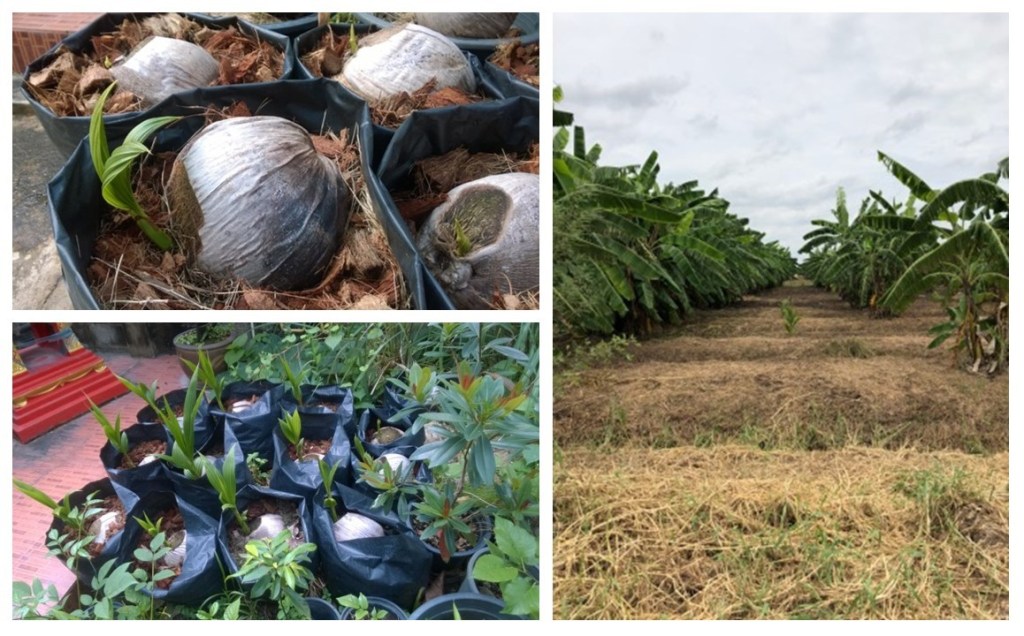
The second cultivation of fragrant coconut trees grown under different micro-environment from the first one started in January 2018. Fragrant coconut seeds of a known cultivar were germinated in nursery bags to give me some ideas on water consumption and time required for the nuts to germinate. During the early stage of germination, I did not need to add any fertilizer since the coconut haustorium can provide the nutrients to young coconut trees for around 6 to 8 months.
Before coconut cultivation, the soil was excavated, and the Indian hemp (ปอเทือง, Crotalaria juncea) was planted and ploughed to enrich the soil with nitrogen. By the time we planted the fragrant coconut trees, the rainy season had started and rained regularly. This will allow me to compare fragrant coconut cultivation practices of different micro-environments and permaculture designs with other perennial fruits and vegetables in the future.
Discover more from À Table! e-Magazine นิตยสารออนไลน์ ครัวของคุณ
Subscribe to get the latest posts sent to your email.

 À Table! e-Magazine นิตยสารออนไลน์ ครัวของคุณ