
The original article is in English.
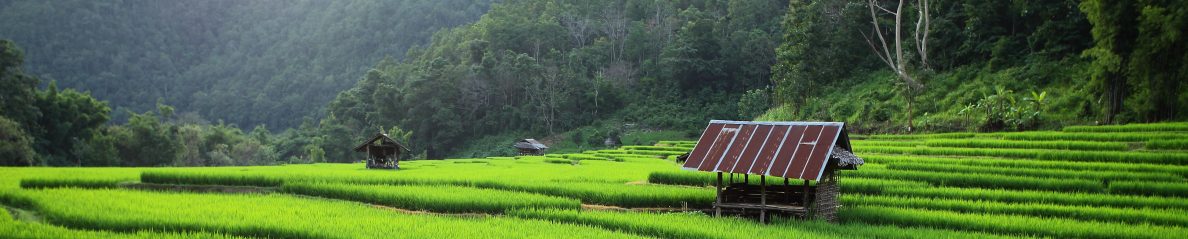
Phra Nakhon Si Ayutthaya Province, which is located in the central plain of Thailand, suffered both the 2011 megaflood and the 2016 drought. The long flooding duration around the BTLLAgroforestry site in Lat Bua Luang district is quite challenging. However, we have anticipated water runoff from the north to the lower Chao Phraya basin during the eleventh month (October) until the second month (January) in the traditional Thai calendar (คนลุ่มน้ำเจ้าพระยาตอนล่างรู้ดีว่า เดือนสิบเอ็ดน้ำนอง เดือนสิบสองน้ำทรง เดือนอ้ายเดือนยี่ น้ำก็รี่ไหลลง).
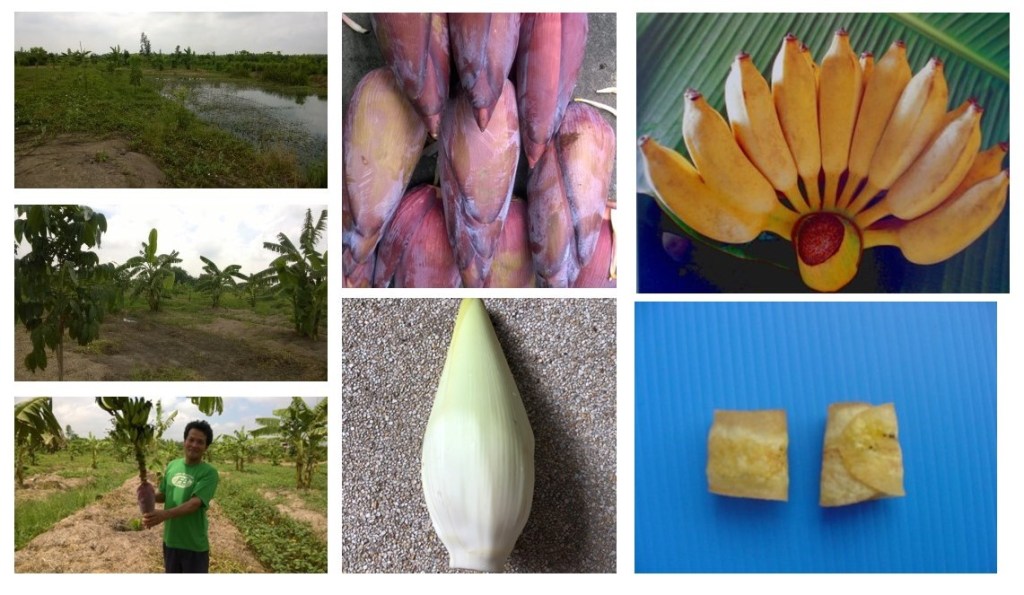
Water management and soil grooving for drainage and drought solutions for banana and mahogany plantations have been prepared after the first rain in July 2016. We have planted banana (Musa ABB cv. Kluai Namwa, กล้วยน้ำว้า) as mono-crop on the ridge and furrow systems and mahogany (Swietenia mahogany, มะฮอกกานี) surrounding the 3-meter deep water reservoir, which was quite acidic, clear and green in 2016.
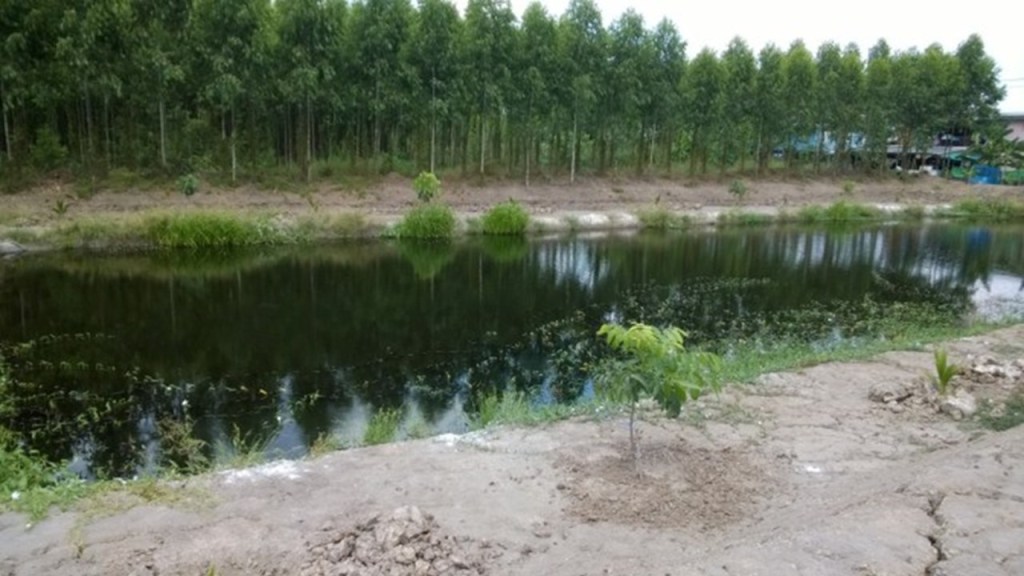
In early 2017, water was secured for the dry season between March and May. However, we needed affordable and sustainable solutions for acidic water and soil. The former sub-district officer, from whom we learned a lot as he was also an Earth Volunteer (หมอดินอาสา), discussed with us using the liming materials such as limestone (CaCO3), quick lime (CaO) or dolomitic limestone [CaMg(CO3)2], which are commonly used around the area and recommended by the Land Development Department to manage acidic soil. However, we were concerned about the water dynamic from rain and irrigation canals that would dilute the calcium salts. Eventually, we decided with him to use cow manure to biologically change the water properties utilising the balance of aquatic plants, fishes and nitrogen sources we put in to adjust the soil and water microbiome and sequester the minerals. The quality of water became better compared to those in 2016.
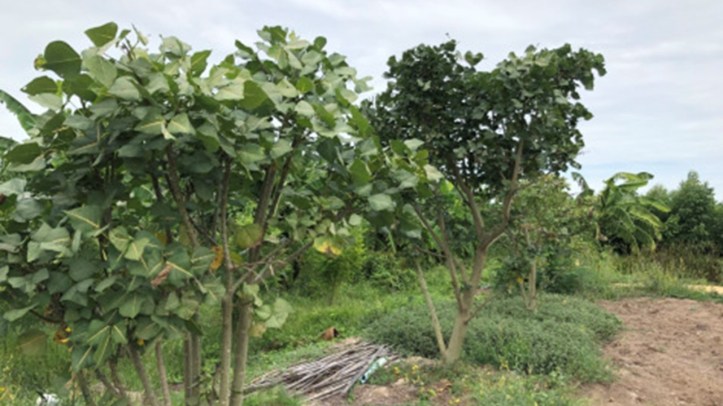
In September 2017, Sena District, our neighbouring district, completed the Kaem Ling Water Retention Projects (โครงการแก้มลิง) with partial support from the state to retain water from the Chao Phraya River and the Noi River in the targeted rice fields after the harvest during August and September. However, Lat Bua Luang district farmers usually finish harvesting in October. Nonetheless, the time sequence of the state’s water retention scheme gave us the idea for water planning for our BTLLAgroforestry project. Bananas started fruiting, mahogany trees could grow over 3 meters high, and they might withstand the sorbed water for a while. We then decided to drain the water from the not-yet-to-harvest rice field of around 180 Rai (1 Rai = 0.395 Acres) from the farmers’ field to the banana plantation site and our water reservoir. Although the soil was covered with rice straw obtained in March 2017 to reduce water evaporation and delay weed growth, the soil was saturated with water in October. Nonetheless, banana plantations could buy the farmers before the rice was mature enough to harvest.
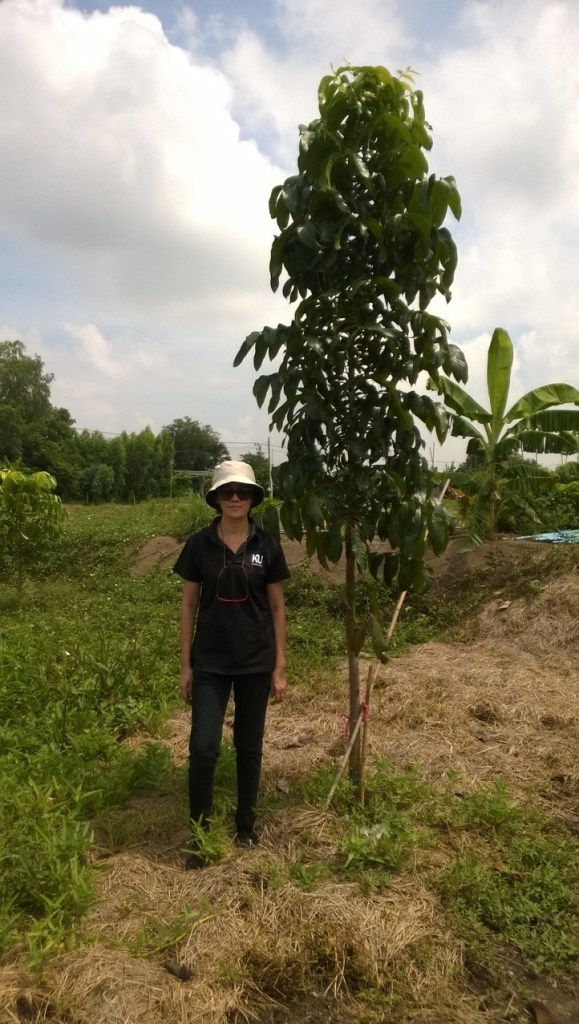
When the year 2018 started, fruitful banana plant production could generate income. However, there will be a lot more to do with crop management and community engagement. For example, how to initiate community enterprise or how to process cheap agricultural produce at farm levels when fresh, high-quality, agrochemical-free produce starts to oversupply in the following years to come.
Discover more from À Table! e-Magazine นิตยสารออนไลน์ ครัวของคุณ
Subscribe to get the latest posts sent to your email.

 À Table! e-Magazine นิตยสารออนไลน์ ครัวของคุณ