
The original article is in English
I am just a beginner in the Permaculture system, having been trying to get some understanding of the soil and the plants on my farm, which is in south Phra Nakhon Si Ayutthaya province. Although the Land Development Department, Ministry of Agriculture and Co-Operatives in Thailand has classified the soil types around the area, I need to practice on site. Not for long before I realized that I am working on poor soil with low organic matters. The actual pH of soil was 4.5 in 2016 since it was reclaimed from our first farm pond. According to the Land Development Department, it was classified as very-fine, mixed, active, acid, isohyperthermic Vertic Endoaquepts (มาจากตะกอนลำน้ำผสมกับตะกอนภาคพื้นสมุทร เกิดการพัฒนาในสภาพน้ำกร่อย)
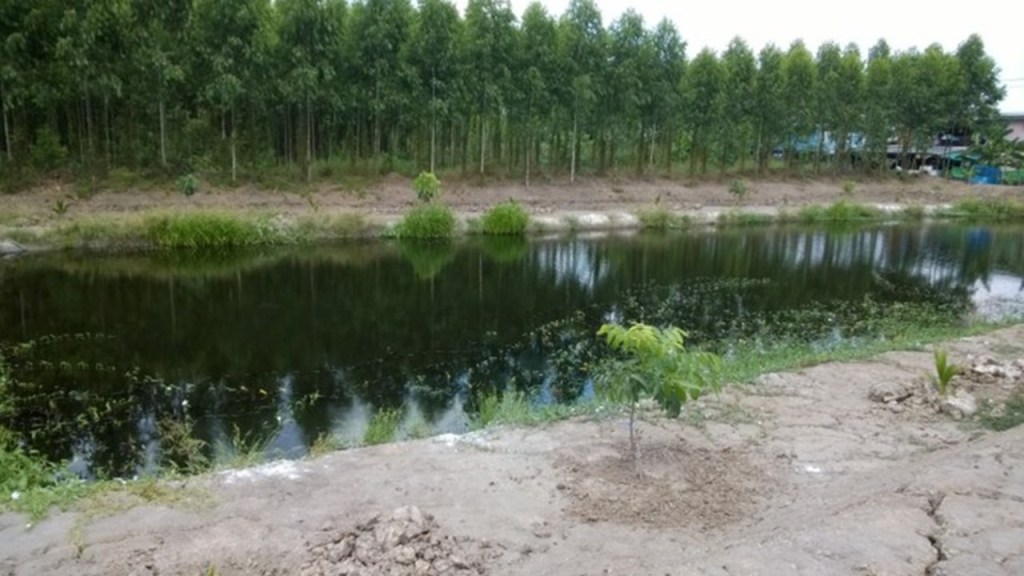
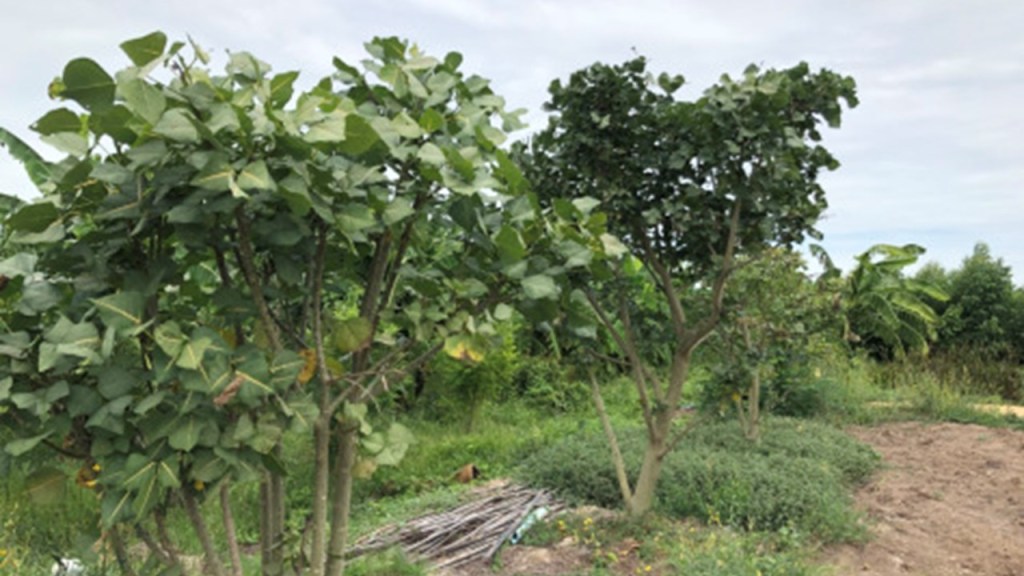
I am not an agronomist and have no background on growing trees or plants in a farmland. I planted many fruit trees I saw the farmers grow nearby during rainy season in 2016. I started at the edge of 40 x 40 meters of the land plot. Eighty per cent of my fruit trees died off within the first year of planting, except two mango trees (Mangifera indica, มะม่วง). They were planted where the top soil was placed when soil excavation was made after I had secured water reservoir. Moreover, these two mango trees have been mulched with Talinum paniculatum (โสมไทย) to conserve the moisture in the soil. Another surviving plant is Erythrina variegata (ทองหลางลาย), which is not edible. I used Vigna radiata (ถั่วเขียว) as mulching plants to make sure that I can conserve soil moisture and may have Rhizobium to help fertilize the soil.
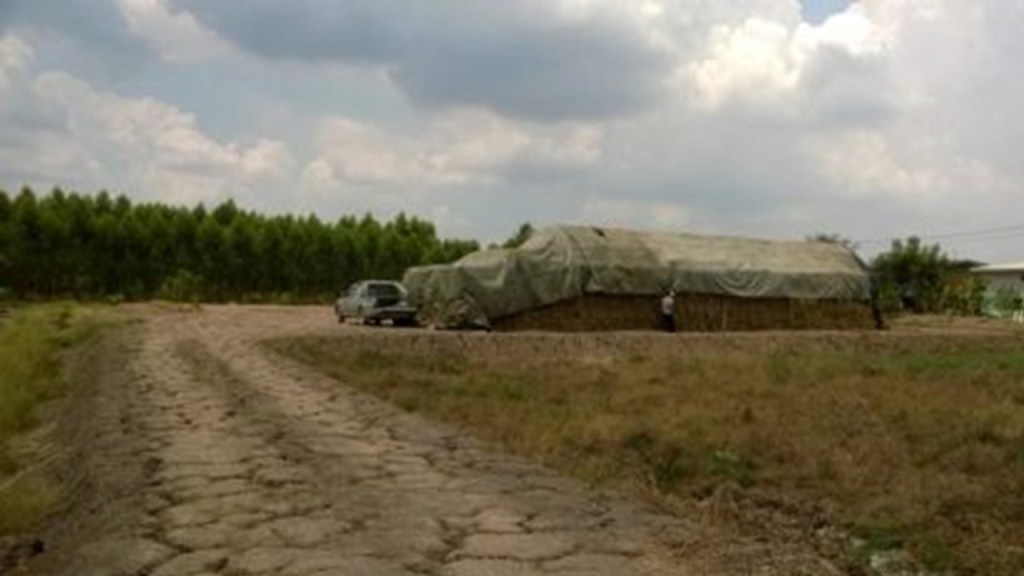
In March 2017, I had rice straw covered the soil and started making fertilizer from cow manure. However, the work was labour intensive and I could not manage well enough. It was not successful and I learnt my lessons on what to do and not to do, also on how I should manage my time as someone who has permanent job in Bangkok and work on the farm in Ayutthaya, which is 70 kilometers away.
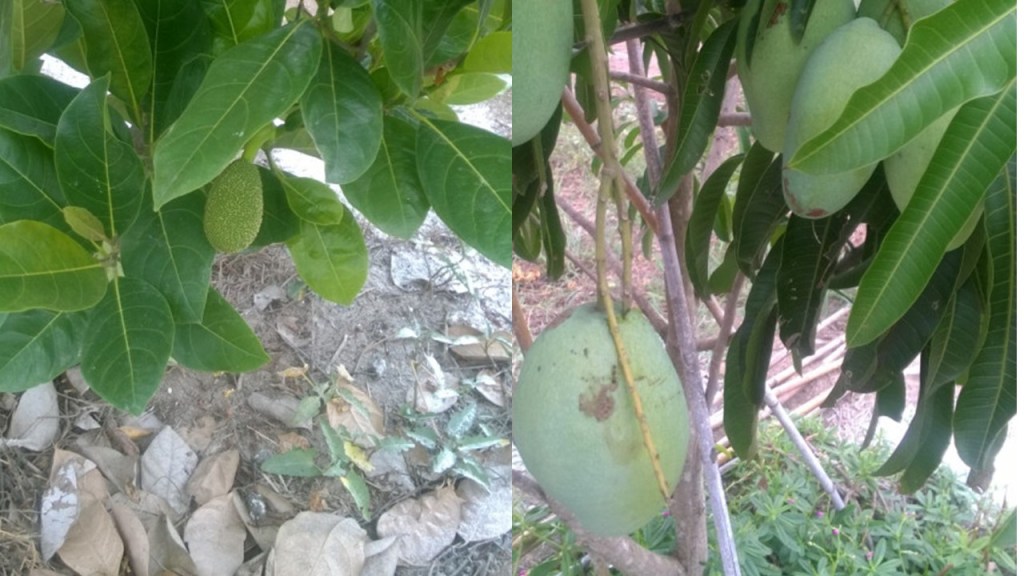
Nonetheless, I started growing some herbs and spices around Erythrina variegate to see which plants could survive together in 2017. Ocimum gratissimum (tree basil, ยี่หร่า, กะเพราควาย), Ocimum tenuiflorum (red basil, กะเพราแดง) and Anethum graveolens (dill, ผักชีลาว) gave me a surprise, as well as Clitoria ternatea (butterfly pea, อัญชัน). Mango (Mangifera indica) and jackfruit (Artocarpus heterophyllus) trees started fruiting after rainy season in 2017. At this stage, I am pleased that they survive and propogate despite the poor conditions and insects. But I also have to think hard on how to increase the productivity yield for the next cultivation and a zero-waste concept in the farm.
Since 2017, Musa ABB cv. Kluai Namwa (กล้วยน้ำว้า) that I grew as monocrop in 2016 outside this 40 x 40 meter land plot has started generating income to the farm. Although the return has not been balanced with the cost, it cheered me up a bit on the possibility of not using agro-chemicals. Over a year, I had a chance to observe the balance of agroforestry nature around the area first hand. I am looking forward to what 2018 rainy season will bring.
Discover more from À Table! e-Magazine นิตยสารออนไลน์ ครัวของคุณ
Subscribe to get the latest posts sent to your email.

 À Table! e-Magazine นิตยสารออนไลน์ ครัวของคุณ